During the war (1941-1945) the creation of 17 million new jobs finally pulls the economy out of the Depression. Millions of married women enter the labor force. The demand for restaurant meals escalates, increasing from a pre-war level of 20 million meals served per day to over 60 million. The combination of increased restaurant patronage with labor shortages, government-ordered price freezes, and rationing of basic foods puts restaurants in a squeeze. With gasoline rationing, many roadside cafes and hamburger stands close.
For a time after the war, rationing continues and wholesale prices stay high but patronage falls off as women leave jobs and return to the kitchen. Trained restaurant personnel are in short supply. Restaurants take advantage of food service methods and materials developed for the armed services. The frozen food industry supplies restaurants with fish, French fries, and baked goods. Boil-in bags of pre-cooked entrees become available. Fast food assembly lines and serving techniques used by the military are transferred to commercial establishments.
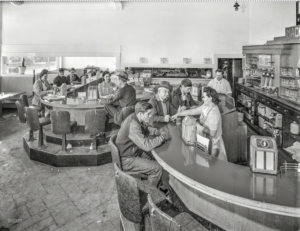
Here’s a collection of 33 amazing vintage photographs that give us a glimpse inside American restaurants from the 1940s.
 |
| It’s 1942 and we’re back in San Francisco for another look at one of the many fine establishments made even finer by the installation of Buckley Music System’s “Music Box.” The eatery is Andy Wong’s “Fair Famous” Mission Trails Restaurant, Harvey Lum, manager, at 500 Sutter Street. |

|
| San Francisco circa 1941. Restaurant counter. And another shot of the Buckley Music System “Music Box.” |
 |
| June 7, 1943. Restaurant soda fountain, Sausalito, California. |
|
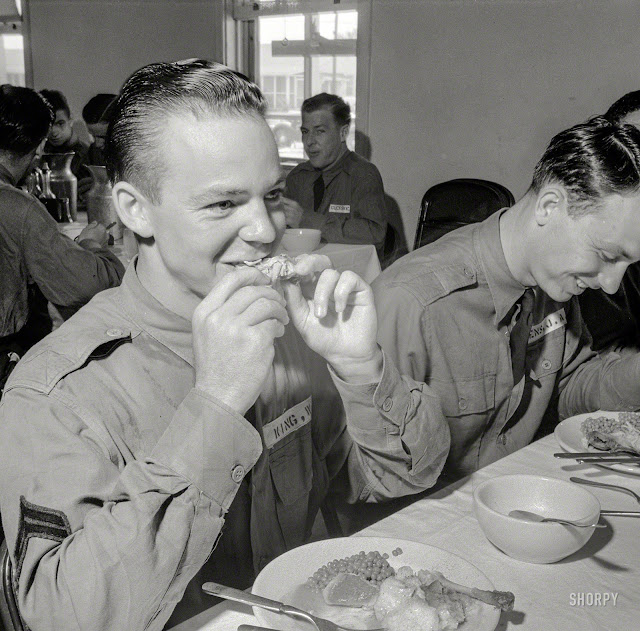
| August 1941. Chickens raised by FSA borrowers is good right down to the bone. Sunday dinner for flying cadets at Craig Field, Selma, Alabama. |

|
| From San Francisco circa 1940 comes this uncaptioned photo of Joe DiMaggio and friend and at least a dozen cups of coffee. |
 |
| April 24, 1946. Pontiac zone managers’ banquet at St. Francis Hotel. |
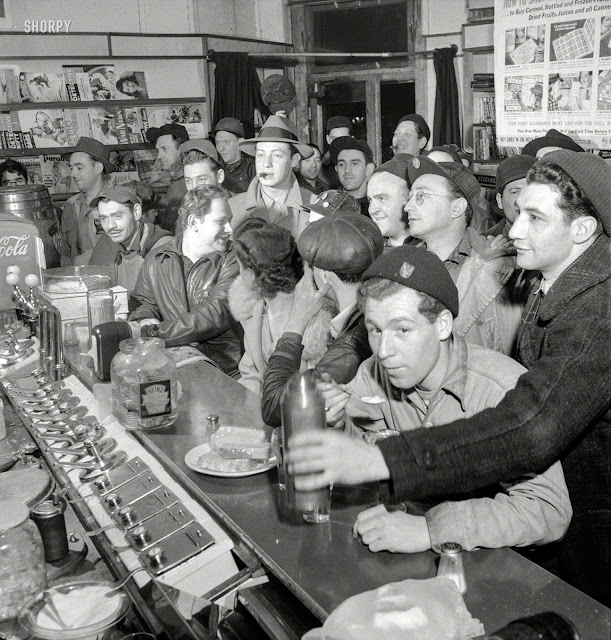 |
| April 1943. Baltimore, Maryland. Third-shift defense workers getting snack at drugstore on corner where their shared car will pick them up around midnight. |
 |
| September 1943. Columbus, Ohio. A Greyhound bus driver off duty. |
 |
| February 1943. Cafe society. Around Albuquerque, New Mexico. |
 |
| April 1943. Washington, D.C. Slightly inebriated couple at the Sea Grill. |
 |
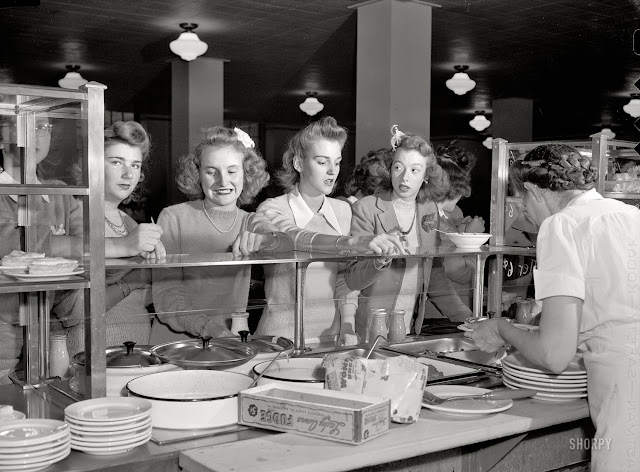
| December 1941. Washington, D.C. Girls in Hot Shoppes restaurant. |
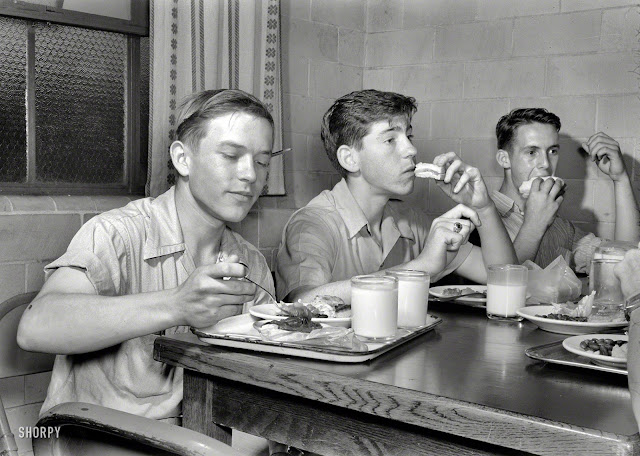 |
| June 1943. Keysville, Virginia. Randolph Henry High School. Cafeteria. Students don’t have much money so they bring produce from farms for which they receive tickets. Lunches cost about 15 cents. Typical lunch: candied yams, macaroni and cheese, fruit salad, deviled eggs, dessert and milk. Milk is free and children can have as much as they want. |
 |
| March 1943. Pearlington, Mississippi (vicinity). Truck drivers at a highway coffee stop on U.S. Highway 90. |
 |
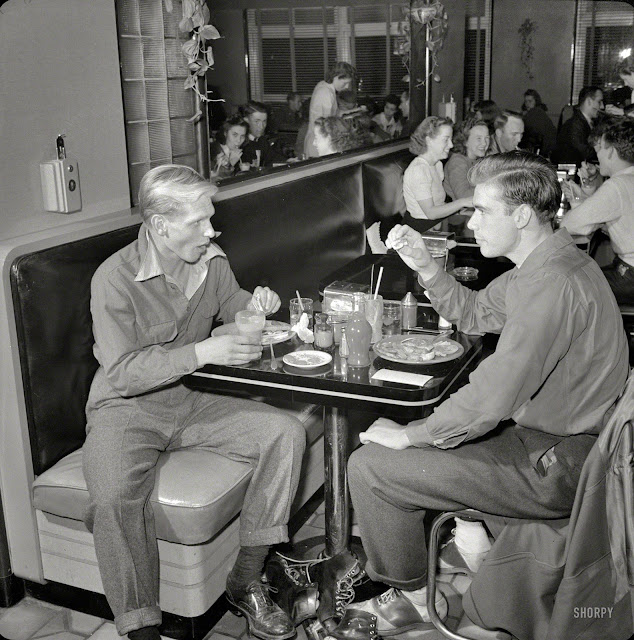
| May 1942. A corporal in the Army takes his girl to dinner. Bakersfield, California. |
 |
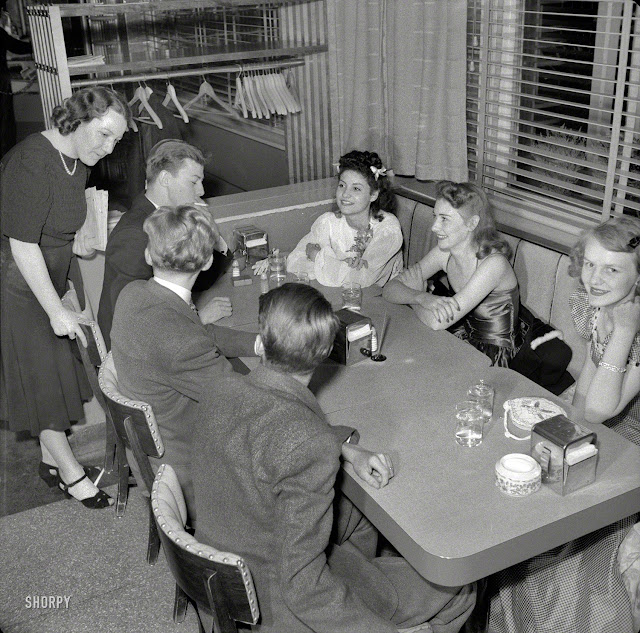
| December 1941. Washington, D.C. Diners in Washington Hot Shoppes restaurant. An exciting night of ice skating awaits, or has just concluded. |
 |
| December 1941. Hot Shoppe restaurant. Washington, D.C. |
 |
| December 1941. Washington, D.C. Washington Hot Shoppe restaurant. Tableware, clothes, shoes — discuss! |
 |
| December 1941. Washington, D.C. Hot Shoppe restaurant. |
 |
| June 1940. Washington, D.C. In the cafe at a truck drivers’ service station on U.S. 1. |
 |
| June 1940. Washington, D.C. In the cafe at a truck drivers’ service station on U.S. 1 (New York Avenue). |
 |
| December 1941. Hot Shoppes restaurant, Washington, D.C. |
 |
| December 1941. San Francisco. Lunch 30 cents, dinner 40 cents, and a “sandwitch” is 15. |
 |
| April 1941. Tavern on the South Side of Chicago, Illinois. |
 |
| April 1941. Entertainers at South Side tavern. Chicago, Illinois. |
 |
| October 1943. Washington, D.C. In the cafeteria at Woodrow Wilson High School. |
 |
| May 1943. Keysville, Virginia. Randolph Henry High School cafeteria. Typical lunch for 15 cents: candied yams, macaroni and cheese, fruit salad, deviled eggs, dessert and milk. Milk is free and children can have as much as they want. |
 |
| December 1943. Washington, D.C. In the canteen for enlisted men at the United Nations Service Center on a Saturday night. |
 |
| March 1943. Pearlington, Mississippi (vicinity). Truck driver eating at a trucker’s stop along U.S. Highway 90. |
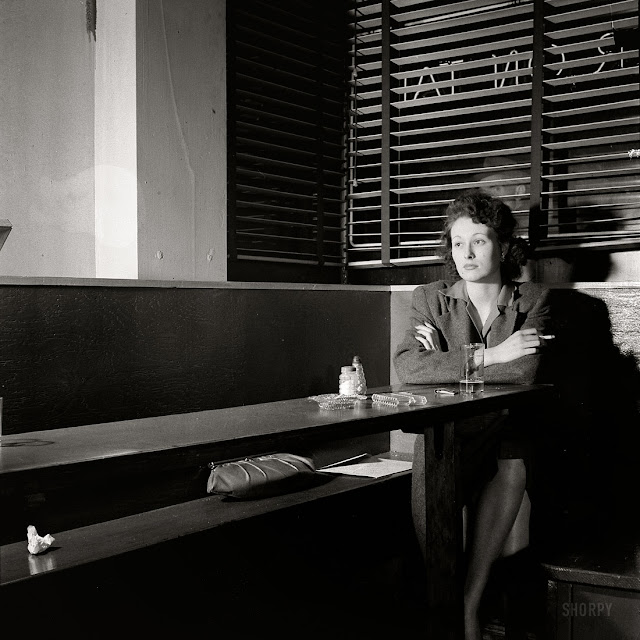 |
| April 1943. Washington, D.C. Girl sitting alone in the Sea Grill waiting for a pickup. ‘I come in here pretty often, sometimes alone, mostly with another girl, we drink beer, and talk, and of course we keep our eyes open — you’d be surprised at how often nice lonesome soldiers ask Sue, the waitress, to introduce them to us.’ |
 |
| February 1940. Girls in beer parlor adjoining dance hall. Marshalltown, Iowa. |
 |
| October 1941. White Tower hamburger stand, the popular place in Amsterdam, New York. |
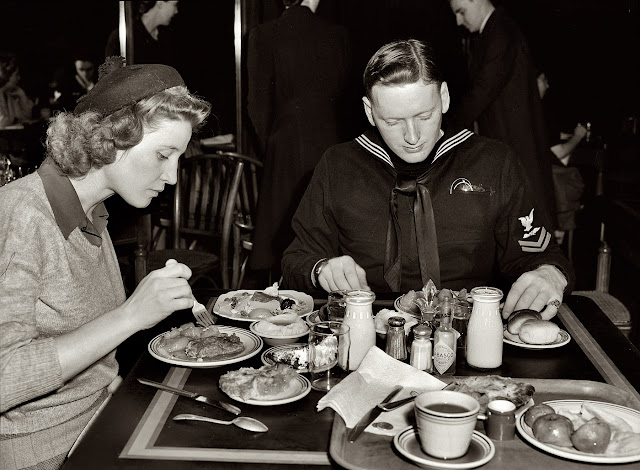 |
| December 1943. Washington, D.C. Hugh and Lynn Massman eating lunch at a cafeteria after a day of sightseeing. Their eight-week-old son is being taken care of at the United Nations service center nursery. |
 |
| “Cold drinks on the Fourth of July” at the Red Robin Coffee Shop in Vale, Oregon. The year was 1941. Can we stay just a little longer? |
(All images from Shorpy)