1980 arrived and so did a twelve day transit strike – the second major transit strike in 14 years. When it was settled, a large operating deficit was forecast and the threat of a fare increase was raised to pay for it. 1989 ended with the threat of a large operating deficit … and the threat of a fare increase was raised to pay for it. Sound familiar?
The 1980s could be summarized as the “Jekyll and Hyde” period of the New York Subway System. As the decade began, it had the filthiest trains, the craziest graffiti, the noisiest wheels, and the weirdest passengers. By the end of the decade, it had cleaner trains, no graffiti, quieter wheels — and the weirdest passengers.
In the 1980s, things got worse before they got better. Decades of deferred maintenance, going back to Subway Unification in 1940, finally caught up with the system. From Unification, through the Board of Transportation era, from the day the New York City Transit Authority was born in 1953, through the MTA’s birth in 1968 — political pressure kept both fares and government funding so far below what it cost to maintain the system that maintenance was just not done. The term “deferred maintenance” became accounting jargon to pass the maintenance burden further out into the future.
In the first half of the 1980s, service, infrastructure and crime were abysmal. There was no preventative maintenance – components were fixed as they failed – which was often. Breakdowns occurred an average of every 6,200 miles; down from 15,000 in the mid-seventies, also not a figure to be proud of. Signage was very poor, or unreadable due to the graffiti. By early 1981, one quarter of the trains were out of service, and thirty minute commutes ballooned to one and a half hours.
In the second half of the 1980s, the subways shone brighter, literally. New stainless steel subway cars, the R-62(A)s for the IRT and the R-68(A)s for the BMT/IND Divisions, began running. After a so-so start, they have proven themselves very reliable. The IRT Redbirds, from class R-26 up, went through a general overhaul program (GOH) and were retrofitted with new components, a new paint job, and air conditioning. The existing BMT/IND equipment at the time, from car class R-32 and up, was also taken through a GOH program, and those cars that were originally manufactured without air conditioning were retrofitted with it. The R-30s were given a light overhaul, but did not receive air conditioning, because they would have become too heavy. The MTA embarked on the first of what became many capital plans in November of 1982, bringing the subway to a state of good repair. Mean distance between failures (MDBF) measurements began to improve markedly, and continue to improve to this day. Graffiti was finally eradicated from all subway cars by the end of the decade (though it has been replaced by “scratchitti” in the 1990s).


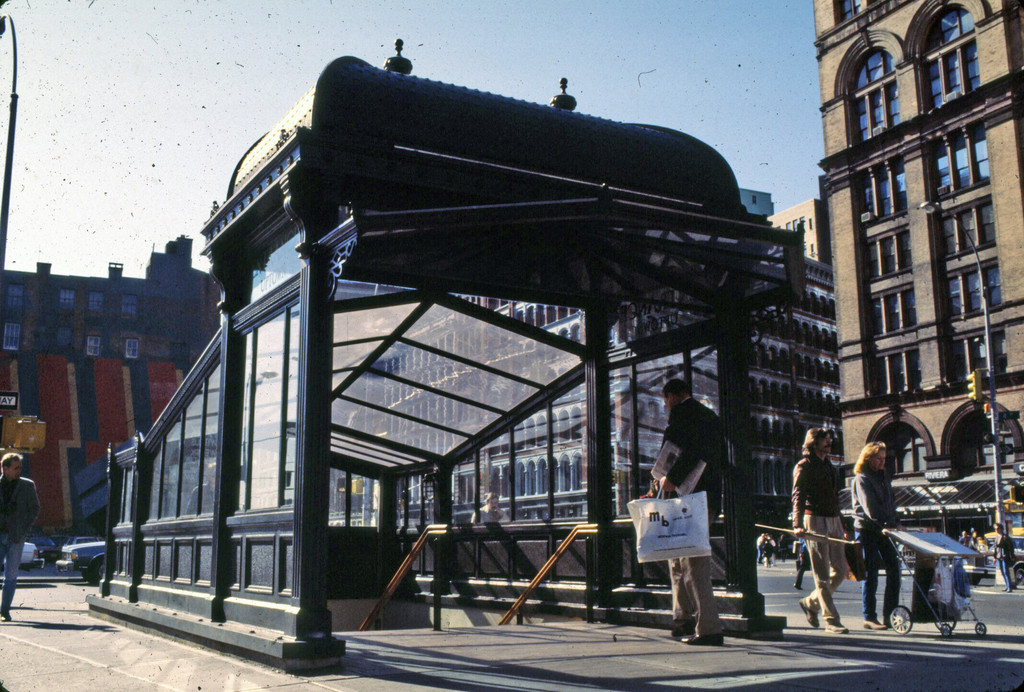


(via nycsubway.org)