In the era before digital photography and the convenience of instant uploads, there existed a charming and innovative solution for getting your precious memories developed – Fotomat.
During the 1980s, these drive-through photo processing booths dotted the American landscape, providing a quick and convenient way for people to transform their film rolls into tangible prints.
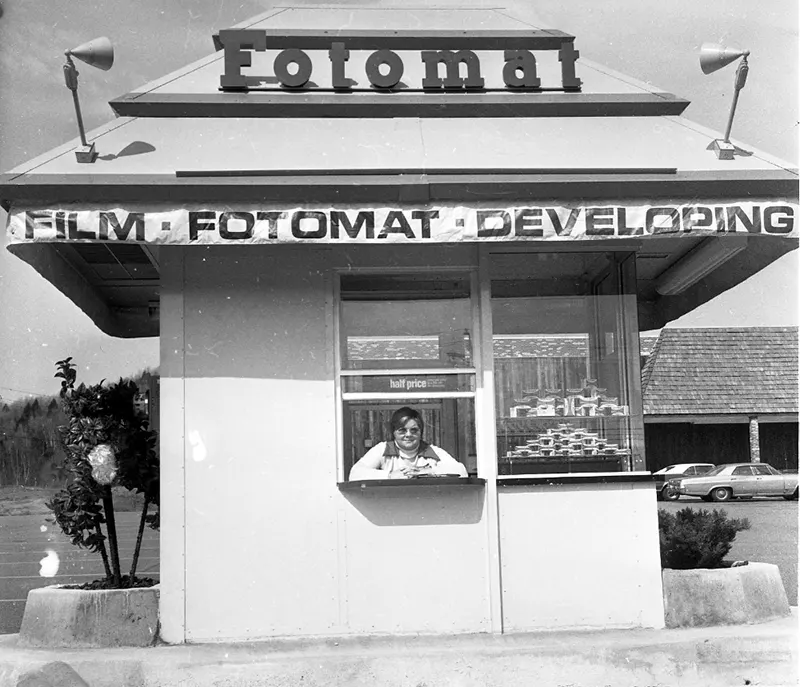
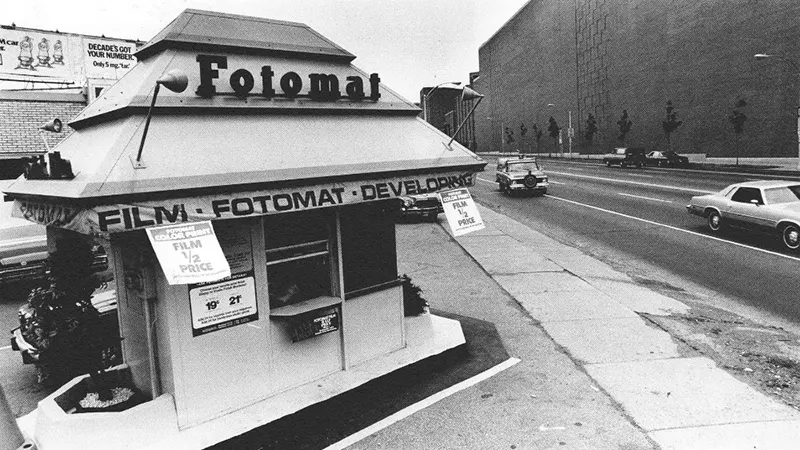
These vintage pictures take us on a nostalgic journey back in time and explore the history and significance of Fotomat, a true icon of its era.
 Fotomat emerged in the late 1960s, capitalizing on the rising popularity of amateur photography and the increasing demand for photo processing services.
The concept was simple yet revolutionary – a compact, drive-through kiosk where customers could conveniently drop off their film rolls for development.
This innovation eliminated the need to enter a traditional photo lab or wait in long lines, offering unparalleled convenience in the photo processing industry.
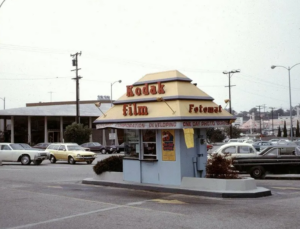
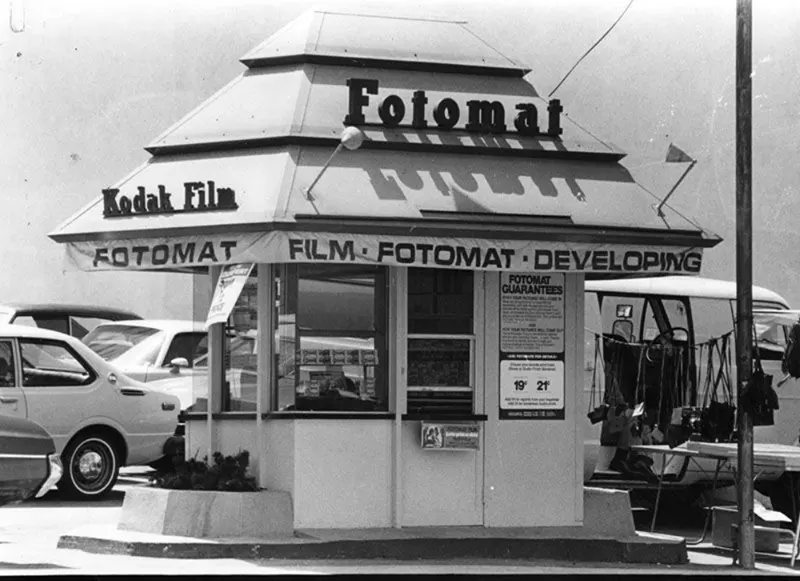
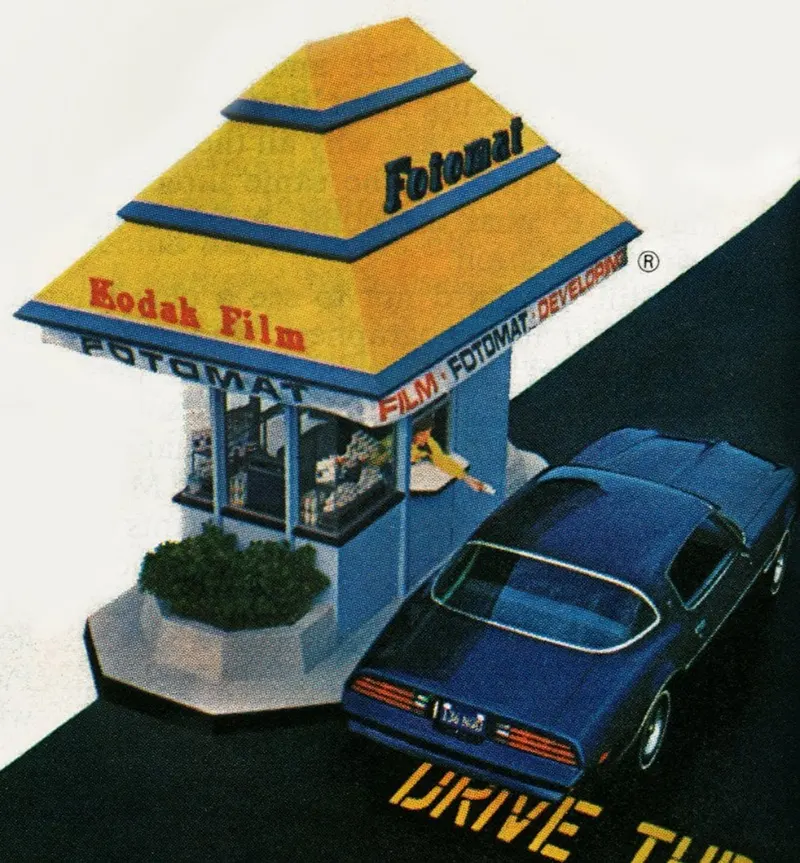
At its peak around 1980, there were over 4,000 Fotomats throughout the United States, primarily in suburban areas. Fotomats were distinctive for their pyramid-shaped gold-colored roofs and signs with blue and red lettering.
Usually positioned in a large parking area such as a supermarket or strip mall, the Fotomat huts required a minimal amount of land and were able to accommodate cars driving up to drop off or pick up film.
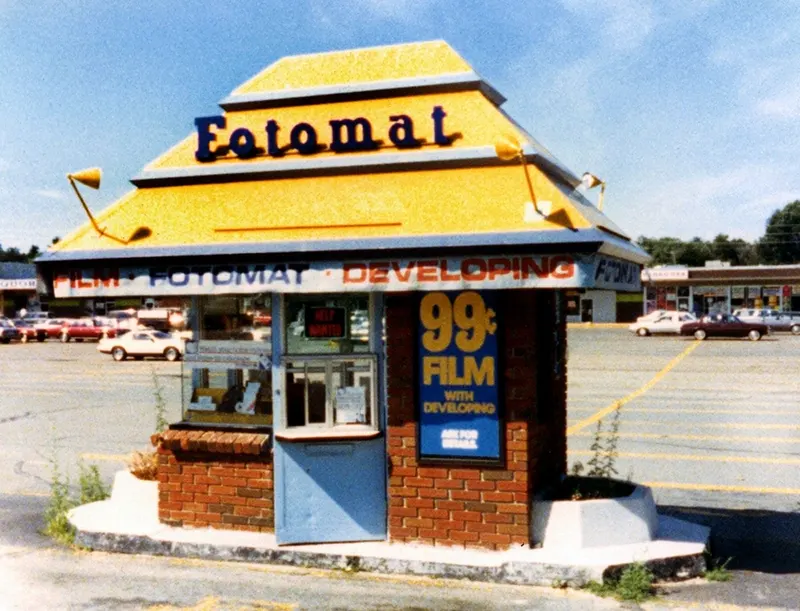
A Fotomat kiosk in Massachusetts in 1987.
The process was swift and efficient, with customers handing over their film rolls and receiving a claim ticket, allowing them to return at a later time to pick up their developed photos.
The photo technicians, often skilled in the art of film processing, ensured that each photograph received proper attention and care.
Customers could trust Fotomat with their memories, knowing that their cherished moments would be transformed into vibrant, crisp prints.
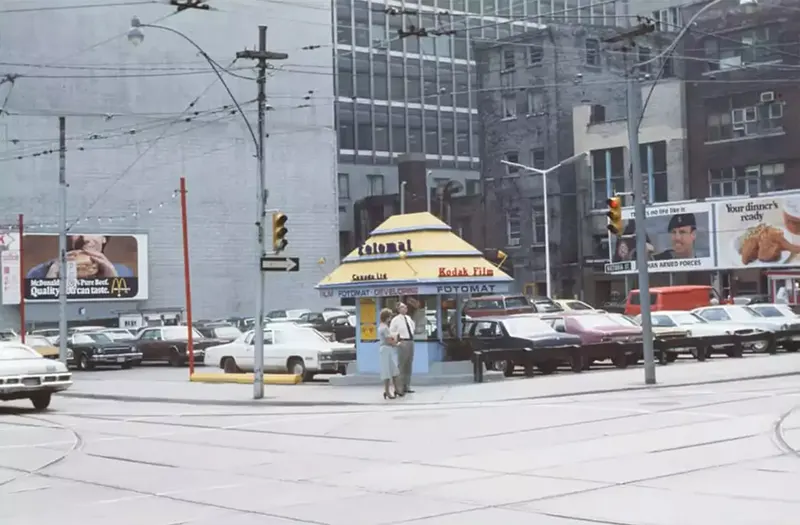 Fotomat sold Kodak and Fotomat brand film, as well as other photography-related products, and offered overnight photo finishing.
Many people assumed Fotomat was owned by Kodak, because of the yellow roofs and font similar to Kodak packaging.
Fotomat provided an additional service of creating filmstrips for schools. When teachers needed custom captioned or sound filmstrips, they could utilize the Fotomat filmstrip development service.
However, teachers were required to capture the pictures on blank 35mm single frame film and record the soundtrack on a cassette tape.
Subsequently, they would bring the film and cassette tape to the Fotomat booth, where they would be sent to the Fotomat Lab for production.

Families would pile into their cars, eagerly dropping off their vacation photos or snapshots of special occasions, eagerly anticipating the moment when they could relive those moments through printed photographs.

The company’s main product, overnight film development, was rendered noncompetitive by the development of the minilab, which provided one-hour photo development and could be installed on-site without a large capital investment.
After the introduction of digital cameras, overnight service eventually became obsolete, and the once-familiar drive-through booths gradually faded away from the American landscape.
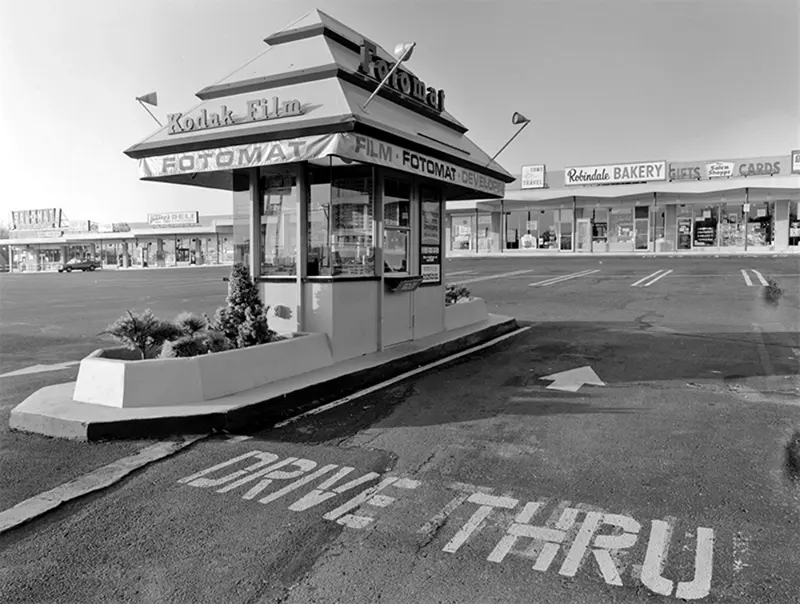
Though Fotomat may have vanished from our modern world, its legacy lives on in the memories of those who experienced its drive-through convenience and personal touch.
It represents a bygone era when capturing and developing photographs held a unique sense of anticipation and magic.
Today, Fotomat serves as a nostalgic reminder of the charm and simplicity of a time when physical prints were treasured keepsakes.






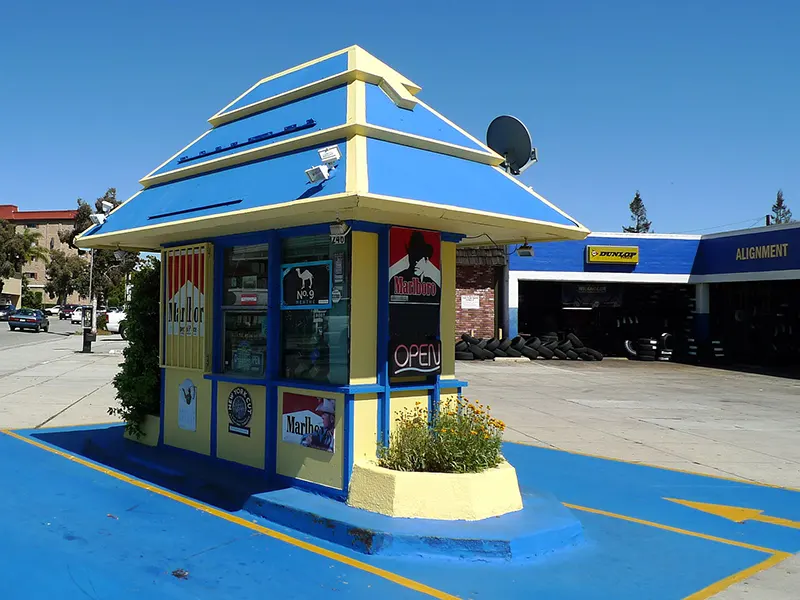
A former Fotomat kiosk, repainted and now selling cigarettes.
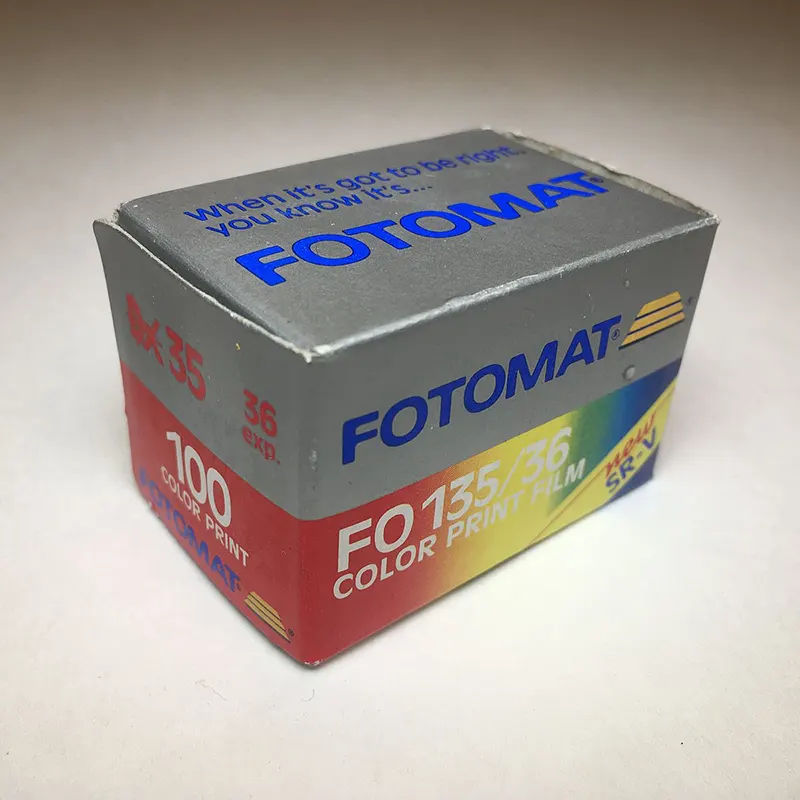
35mm Fotomat Brand Film – 1980’s.
(Photo credit: Pinterest / Wikimedia Commons / Flickr)